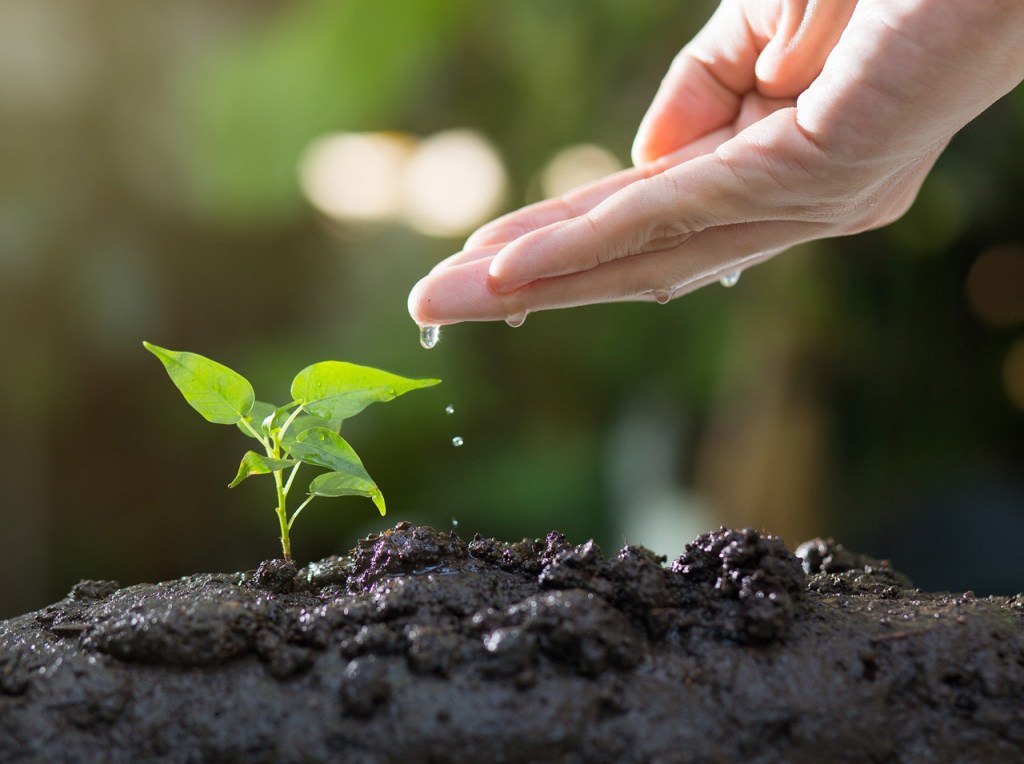
The seeds of native wildflowers are adapted to the cold, wet Pacific Northwest winters. Some of these species require exposure to a period of cold and wet conditions for seeds to germinate. This is called stratification. Planting in fall and winter give them a good start.
thods for Sowing Seeds
Direct Sowing: Identify a sunny space. Remove weeds. It can be difficult to tell weeds from flowers seedlings when they first emerge in spring, so a weed-free area is ideal. Combine seeds with a material such as coir, vermiculite or sand, to hold the seeds in place and keep them from being eaten. Rake the soil lightly before broadcasting the seed mixture.
Sowing in Pots: Start seeds in pots and grow them outdoors in a cold frame. Protect them from being eaten, using hardware cloth on top and bottom of the cold frame. Once large enough, the seedlings can be planted into the garden and won’t be mistaken for spring weeds. This method was adapted from The Wild Seed Project: https://wildseedproject.net
Materials Needed
- Pots: The pots must survive outside for a year so choose a material that won’t decompose quickly like cow pots or milk cartons. Plastic pots can be used year after year.
- Labels: Use plant labels because young seedlings look alike. Use a soft-leaded pencil to write the species name on plastic labels. Pencil marks last longer than ink.
- Soil & sand: In contrast to the lightweight, soilless medium used for starting vegetables seeds, soils rich in organic matter works best for starting native seeds. Select a compost-based soil mix with coir; don’t use products containing peat moss. Cover the seeds with washed sand. Sand helps hold the seeds in place during the rainy winter months.
- Cold frame and hardware cloth: Place the well-watered seed pots in a cold frame outdoors. To keep out the critters, place hardware cloth underneath and on top of the cold frame.
- Seeds: A wide selection of wildflower seeds native to the PNW can be found at many nurseries. Once these plants are established, it is easy to collect seeds for future plantings or sharing.
Planting Guidelines for 10 Native Wildflowers
We offer information on how to sow seeds of ten native species (Table 1). These species were shown to support robust wild bee communities in an OSU Garden Ecology Lab study. Propagation guidelines are adapted from research conducted by the OSU Garden Ecology Lab and propagation studies conducted by Master Gardener Bob Shaw. Each species has been successfully propagated by Master Gardeners using these methods in the Portland, Oregon.
| Table 1: PNW Native Wildlife Propagation Guidelines | ||||
| Native Plant Name | Type | Stratification Requirements | When to Sow | Propagation Notes |
| California poppy (Eschscholzia californica) | annual | not required | Direct sow in fall or spring | Do not sow in pots. Roots are sensitive to disturbance. |
| common madia (Madia elegans) | annual | not required | Sow in cell packs in winter or early spring. | Cell packs (2.25” x 2”x3”) provide length for root growth. |
| farewell-to-spring (Clarkia amoena) | annual | not required | Sow in pots in winter or early spring. | Cell packs (2.25” x 2”x3”) provide length for root growth. |
| globe gilia (Gilia capitata) | Annual | not required | Sow in pots in winter or early spring. | Cell packs (2.25” x 2”x3”) provide length for root growth |
| Canda goldenrod (Solidago canadensis) | Perennial | Not required | Surface sow in winter or early spring. Requires light to germinate. | Alternatively sow in 3-4” pots. |
| Douglas aster (Symphyotrichum subspicatum) | Perennial | 6-8 weeks. Germination temperature 50o | Sow in winter or spring. Seeds need light to germinate | Sow in 3-4” pots and cover with sand to the depth of the seed. |
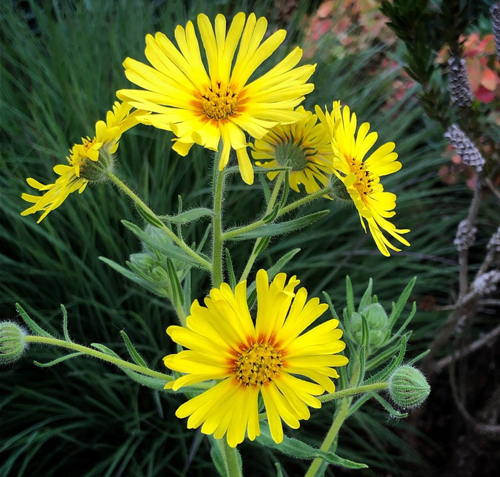
| Oregon sunshine (Eriophyllum lanatum) | Perennial | 6-8 weeks. Germination temperature 50o | Sow in winter in pots. Seeds require light to germinate. | Sow in 3-4” pots and cover with sand to the depth of the seeds. |
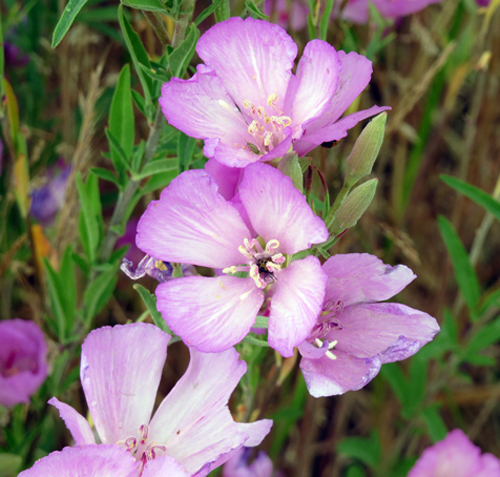
| Rose checkermallow (Sidalcea asprella ssp. virgata) | Perennial | Information varies by source | Sow in winter or early spring. | Cell packs (2.25” x2”x3”). Germination sporadic. |
| Varileaf phacelia (Phacelia heterophyla) | Perennial | 30 days. | Surface sow in winter. Requires light to germinate. | Sow in 3-4” pots and cover with sand to the depth of the seeds. |
| Western yarrow (Achillea millefolium) | Perennial | Not required | Surface sow in mid-spring. Germination temp 65-75o | Sow in cell packs (2.25”x2.5”x3”). Cover with sand to the depth of the seeds. |
Click here for a printable pdf of this article. Written by Carole Hardy August 2024
 Clackamas County Master Gardener™ Association