Long-season summer and fall bloomers are some of the most attractive and affordable investments a gardener can make. They are inexpensive, easy to care for, and will bloom continuously throughout the summer and fall. We have suggestions for sun-loving annuals and perennials, as well as those that thrive and bloom in partial shade.
In the Pacific Northwest, lower sun angles result in longer shadows cast from buildings and vegetation. Because mild, wet seasons encourage the growth of trees and shrubs, summer annuals and short perennials often grow in the shade of these larger plants. Plants with a short bloom season can utilize spring weather to store food energy, supporting the production of a few blooms and seeds, and then use fall weather to recharge for the following year. Plants with a long bloom season require a significant amount of sunlight to continue producing energy for all those extra blooms.
Full-sun areas are rare in our yards, and a large percentage of the plants with long summer bloom seasons require full sun. It is essential to understand the standard definitions of sunlight exposure:
- Full sunlight: more than six hours of direct sunlight per day throughout the growing season, longer for tomatoes and other vegetables.
- Partial sunlight: three to six hours per day of direct sunlight. If the three hours your plant receives are in early morning or late afternoon, it is getting less than half the amount of light that it would if those same hours were midday. So, its site is closer to moderate shade.
- Moderate shade: a site receiving direct unobstructed sunlight for two or three hours each day.
- Deep shade/heavy shade: sites receiving less than two hours of direct sunlight each day. In practical terms, sites under most trees, or north/north-northeast, or north-northwest of buildings, shrubs, trees, and hedges.
Again, because we are so far north, sun intensity is substantially less than that in California or most of the lower 48 states. So, “full sunlight” means a solid six hours, with eight hours being much better.
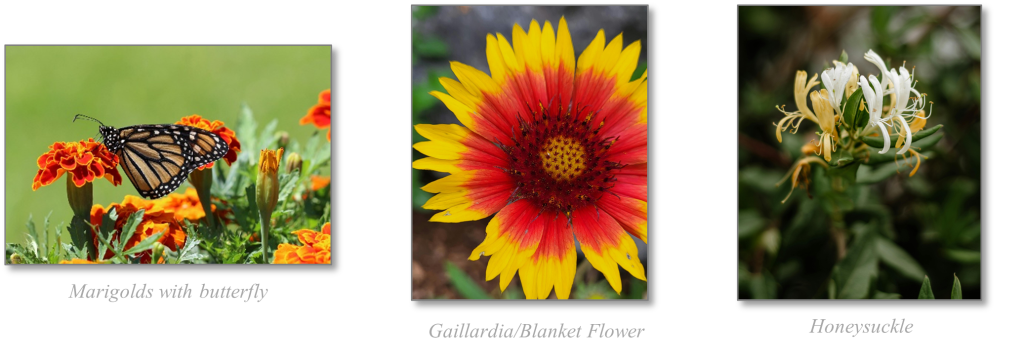
Full-sun annuals that will bloom through summer until the rains return:
- Marigolds
- Petunias
- Cosmos
- Nicotiana: Look for the popular, colorful, and fragrant cultivars.
- Zonal geraniums
- Pelargonium (other geraniums)
- Zinnias
- Snapdragons
- Gerbera daisies
- Osteospermum: also called African Daisy
- Mandevilla: large blossoms in red, white and other colors; formerly rare, now easy to find
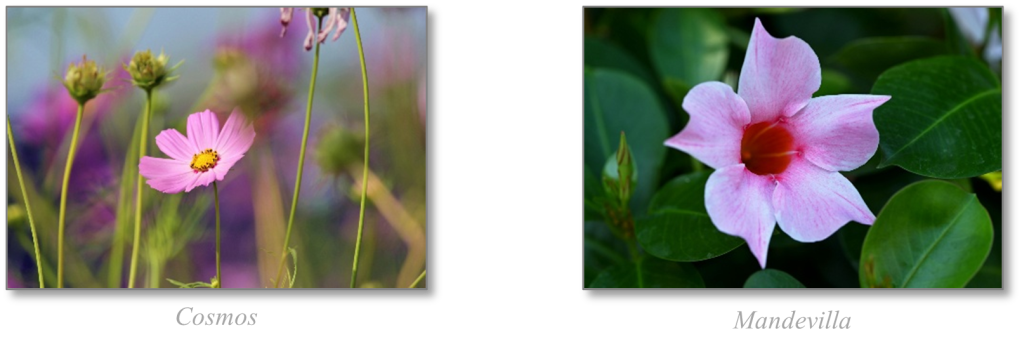
Full-sun perennials that will bloom all summer and fall:
- Sun Trumpets: shorter cultivar of Tecoma stans with longer bloom period, may be invasive in parts of the US
- Honeysuckle: old-fashioned honeysuckle is Lonicera periclymenum; not all honeysuckles in cultivation are fragrant.
- Joe Pye Weed Eutrochium purpureum
- Rudbeckia: also called Coneflower, black-eyed Susan, Gloriosa Daisy, Yellow Ox Eye
- Coreopsis: also called Tickseed, beautiful and easy
- Gaillardia: also called Blanket Flower/Firewheel, perennial, but usually lives just 2-3 years, may self-seed
- Sunflower Helianthus annuus: many unusual varieties
- Chrysanthemum: fall blooming, triggered by short day length
- Roses
Long-blooming annuals that thrive in partial sunlight conditions:
- Impatiens: partial sunlight/shade
- Lobelia: partial/full sunlight
- Wishbone Flower Torenia fournier: partial sunlight/shade
- Tuberous Begonias
- Calibrachoa Million Bells: full/partial sunlight
- China Aster Callistephus chinensis: full sunlight to partial shade
- Coleus: grown for bright, colorful foliage, not flowers
- Sweet potato vine: grown for colorful foliage, not flowers
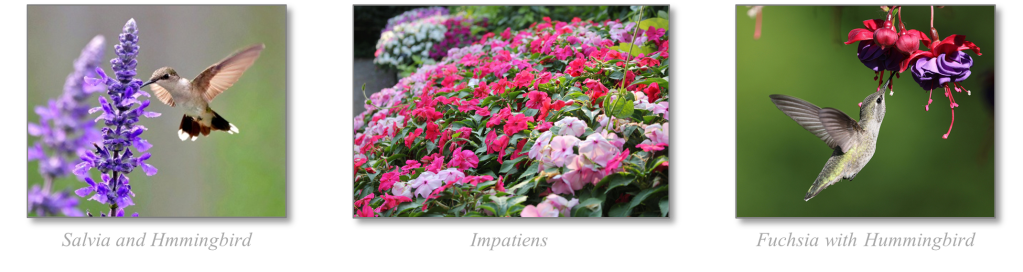
Long-blooming perennials for partial sunlight:
- Hardy Fuchsia: Refer to the list in the Resource section for hardiness.
- Salvia
- Douglas Aster Symphyotrichum subspicatum: full sunlight to partial shade
These lists display genus names when there are multiple species, hybrids, or cultivars. Most listed plants have been widely grown for many years. If you find an unfamiliar plant, look for images or care instructions — make sure the advice fits your area, as tips for other regions may not be applicable. Many of these plants can be grown in pots and placed around the yard, along paths, or on porches and patios. Plants in containers will need regular watering during the summer.
And finally, bees and butterflies love this long-season food supply. Some native “specialist feeders” might not recognize most of these, but many “generalist insects” and hummingbirds will keep you entertained all summer.
Resource: Northwest Fuchsia Society’s list of hardy fuchsias https://www.nwfuchsiasociety.com/hardies/hardyfuchsias.htm
Click here for a printable pdf of this article. Written by Justin Dune, July 2025
Photos courtesy pexels.com: Marigold/Katie Burandt, Gaillardia/Dawn Adams, Honeysuckle/Nadiye Odabasi, Cosmos/Naushil Skyhawk-Asia, Mandevilla/Gutjahr Aleksandr, Coreopsis/Jinjian Zhang, Joe Pye Weed/Julie-Dalton, Sun Trumpets/M Nannapaneni, Salvia/ Jmhcarriger, Impatiens/Alex-Ohan, Fuchsia/Veronika Andrews
 Clackamas County Master Gardener™ Association