It is that time of year when you are out in the garden, weeding, seeding, planting and pruning. There is just one more task you may consider – dividing your plants.
Dividing is the process of digging up plants, prying or cutting them apart, and then replanting them to maintain vigor and flowering throughout the growing season.
While you can divide many perennials, this article will focus on iris, peonies and daylilies.
Iris
Iris is hardy, reliable, easy to grow, deer resistant and drought tolerant.
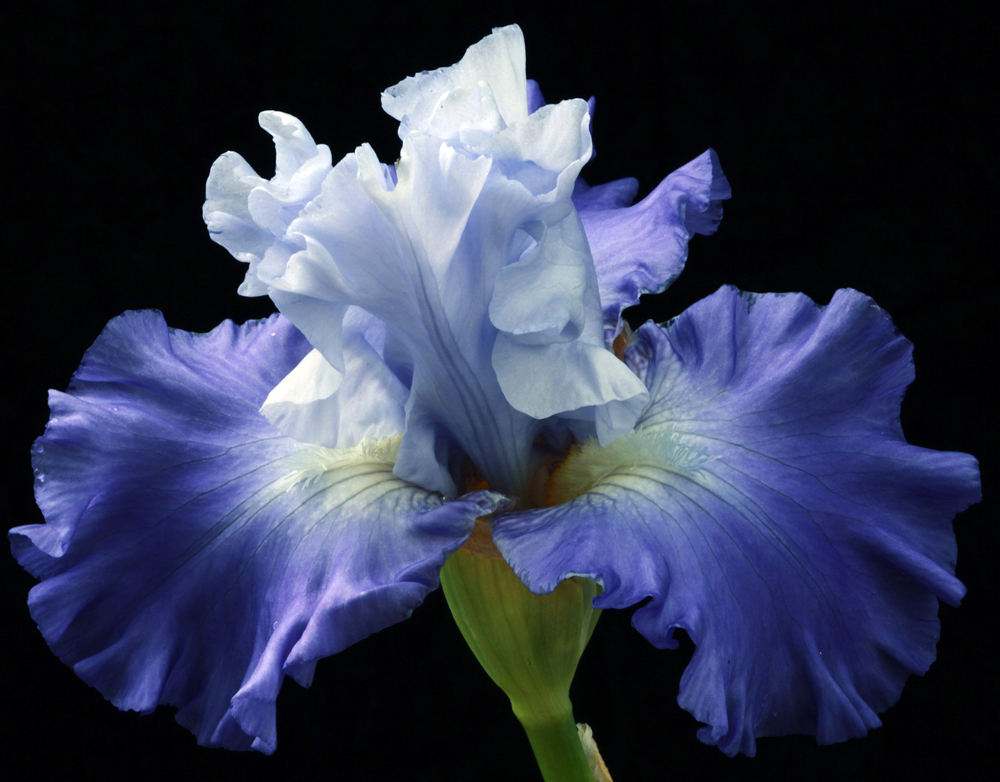
Iris species are separated into two major groups: rhizomatous and bulbous. Rhizomes are root-like structures, growing horizontally underground. This group includes Siberian iris, Japanese iris and Bearded iris.
Bulbous iris includes tiny early iris (Iris reticulate, I. danfordiae and I. histroides) and Dutch iris (I. xiphium). They grow like daffodils and are planted in the autumn. Bulbous iris will come back every year if conditions are right. Sunny exposure and good drainage are important to keep the bulb from rotting. No division is necessary.
In the Pacific Northwest, Siberian, Japanese and Bearded iris are the most common and should be divided every three to five years or when the production of blooms has diminished. Avoid dividing during winter when they are surviving on stored energy in their rhizomes. Divide when they become dormant during late summer to fall, to reduce any chance of bacterial soft rot.
Tips for Dividing Irises
- In the late summer to fall, snip the leaf blades to about one third of their height. It will reduce stress as the plant concentrates on new roots.
- Carefully remove the entire clump with a spade or garden fork.
- Divide the rhizomes by pulling them apart with your hands. They should easily break off at a joint. If you use a tool like a knife, make sure to dip it into 10% bleach solution after each cut.
- A good rhizome should be about as thick as your thumb, have healthy roots and one or two leaf fans. Large, old rhizomes that have no leaf fan should be discarded.
- Be on the lookout for the iris borer (a fat white worm). If found, destroy the rhizome. Soft, smelly or rotting rhizomes should also be destroyed. Do not place in the compost.
When planting the rhizomes, dig a shallow hole approximately ten inches in diameter and four inches deep. Build up a mound of soil in the center of the planting hole and center the rhizome on the soil mound. Spread out the roots on either side. Fill the hole with soil. Do not plant too deep. The top of the rhizome should just be visible at the soil surface. Tamp the soil to anchor the rhizomes.
Newly planted rhizomes should be watered thoroughly. Do not mulch. Mulch will encourage rot.
It is important that the roots of newly planted irises be well established before the end of the growing season. Make sure you have planted them four to six weeks before the first frost.
Irises thrive in most well-drained soils. The ideal pH is 6.8, but they are tolerant of less than perfect soils. Test your soil before you make any corrections.
The Magic of Irises, https://s3.wp.wsu.edu/uploads/sites/2073/2020/07/The-Magic-of-Irises.pdf
Peony
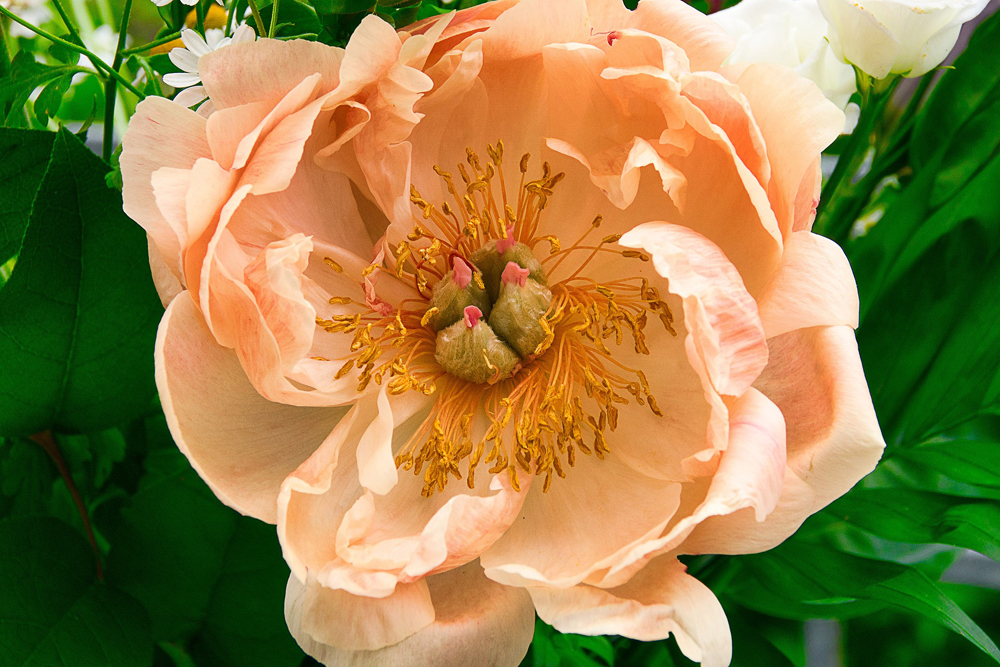
Peonies are native to China and the European coasts of the Mediterranean Sea. They enjoy a snap of cold for the best performance and are hardy to Zone 3. These hardy perennials can live up to 100 years.
There are three types: tree peony (Paeonia suffruticosa), herbaceous peony (Paeonia lactiflora) and intersectional (a hybrid between tree and herbaceous). Tree peonies are not divided; the latter two may need division if they stop producing flowers.
To divide, cut the plant down to the ground in the fall, dig it up, wash off the tubers and use a knife to separate them, leaving three to five eyes on each tuber.
Dig a hole and work in organic material. The hole should be large enough for the roots to spread out, but not so deep that the eyes of the tuber are more than 2 inches deep.
Peonies like to be planted in full sun but will tolerate a bit of shade. Avoid planting near trees or other large, established plants, because they will compete for water and nutrients. Peonies thrive in well-drained soil and should be watered well when it is hot.
There is no need to fertilize when planting. In the spring, when new shoots emerge, add a 5-10-10 fertilizer. You may fertilize again halfway through the growing season.
The Powerful Beauty of Peonies Makes them a Favorite in the Garden,
https://today.oregonstate.edu/news/powerful-beauty-peonies-makes-them-favorite-garden
Peonies, https://s3.wp.wsu.edu/uploads/sites/2076/2024/07/C090-Peonies.pdf
Daylily
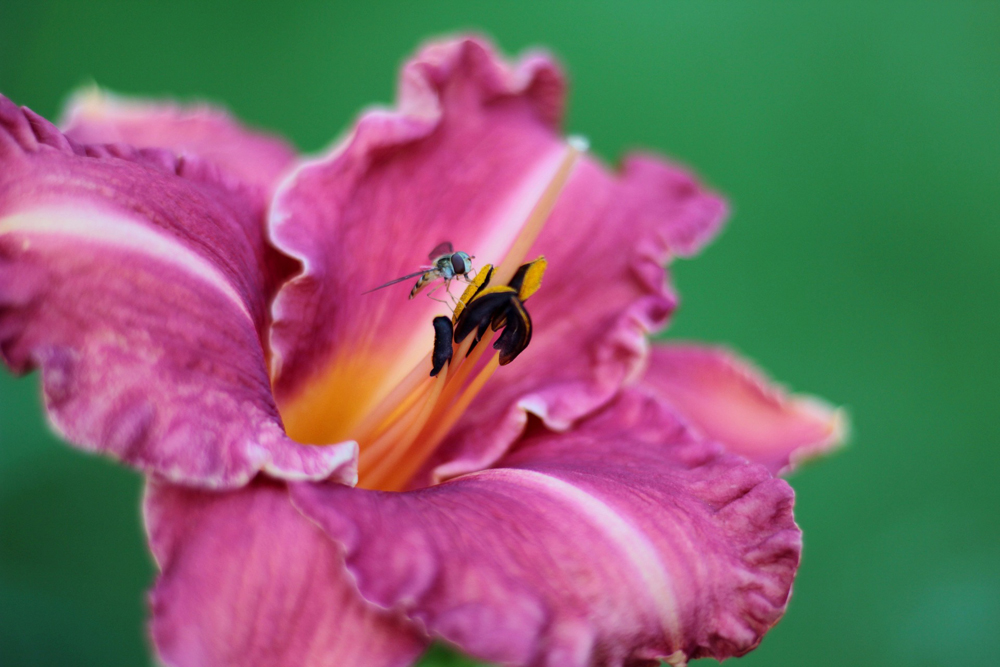
Daylilies are one of the hardiest, low maintenance, showy perennials. They grow into large clumps and like to be divided every three to five years. Division promotes more flowers, but plants divided in the spring may not bloom the same summer.
Tips for Dividing Daylilies
- Divide and transplant daylilies in the spring or right after the final bloom.
- Cut back the foliage to 5-6”.
- Dig up the root mass from the ground.
- Shake off soil or wash off with a hose.
- Wiggle the plant back and forth to separate individual fans. Each fan is a plant that is complete with foliage, a crown and roots.
- If they are hard to separate, you can cut into the crown with a knife until they can be pulled apart.
Dig a hole two times as wide as the roots and a foot or so deep. Pile up the dirt in the center of the hole to make a mound and put the plant on top of the mound with the foliage end up. Spread the roots out to the bottom of the hole and fill back in with soil so the crown of the plant is at the top of the hole. Water in well.
Daylilies https://extension.umn.edu/flowers/daylilies
Don’t Help Invaders
A special note: Gardeners love to share plants. However, invasive species, like Japanese beetles and the “jumping worm,” make moving plants or soil from one location to another a way to spread these invaders.
Follow these steps before sharing your plants:
- Remove soil using a bucket of water.
- Check the plant and roots for any signs of pests or disease.
- Repot into clean potting soil.
- Use only healthy specimens to prevent the spread of any insects or diseases.
Japanese Beetles in Oregon, https://extension.oregonstate.edu/catalog/pub/em9158-s
Invasive Jumping Worms Leap into Oregon, https://today.oregonstate.edu/news/invasive-jumping-worms-leap-oregon
Click here for a printable pdf of this article. Written by Cheryl Borden, August 2024 photos via Pixabay
 Clackamas County Master Gardener™ Association