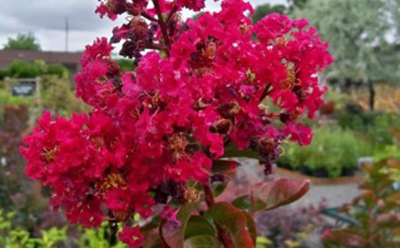
Crepe Myrtle is the most popular street tree in America, and one of the most popular residential landscape trees – except in the Pacific Northwest.
Why most of the country likes it:
- Long bloom period
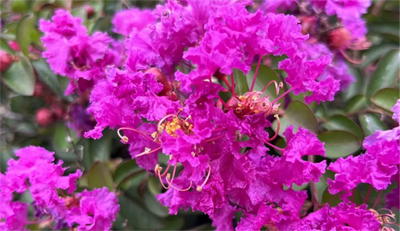
- Brilliant flowers
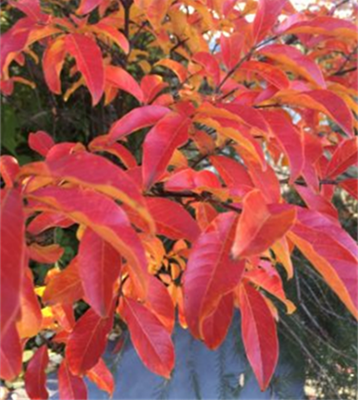
- Good fall color
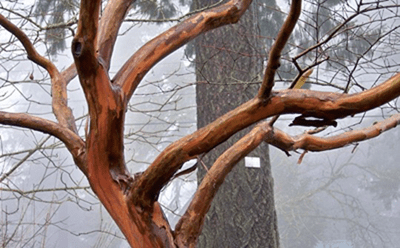
- Handsome exfoliating bark for winter interest
- Each cultivar has its own predictable final size
- Very tolerant of soil type; good in clay-rich soils
Why it hasn’t been so popular in the Pacific Northwest:
- Short bloom period
- Dull leaves
- Often unsightly due to severe powdery mildew
- Ugly form after pruning
Keys to success:
- Choose disease resistant cultivars
- US National Arboretum: 30+ disease resistant cultivars https://www.usna.usda.gov/science/plant-introductions-and-releases/plant-intros-genus1
- In the Portland metro area, Xera Nursery has been trialing additional cultivars for disease resistance and early bloom https://xeraplants.com/crape-myrtles-lagerstroemia/
- Choose early-blooming cultivars
- All Crepe Myrtles start blooming after experiencing a certain number of hours with temperatures above 85 degrees; some cultivars start quickly after that; others wait much longer
- Choose cultivars based on final size
- Each cultivar has a predictable ultimate size; pick one that will not require future pruning for size or height control
- Choose cultivars with blossom color and winter bark you like BUT limit your choices to those of appropriate size and PROVEN (not just marketed) as disease resistant and early blooming in the PNW
Summer watering is critical to long bloom season
- Without proper watering, short (2 week) bloom season and dull foliage
- With deep watering every week or two, bloom season through summer and bright glossy foliage
- Deep watering here means
- Soaker hose spiraled from trunk to dripline, run 3 to 4 hours or
- Drip irrigation: same area, multiple emitters, 3-4 hours or
- Less desirable, but acceptable if necessary (mow strips): run dribble of water with hose end located at the trunk, minimum 3 to 4 hours
- NOT acceptable: hand watering with ordinary hose nozzle putting down 5 or 10 gallons. Most water will run off dry ground, not soaking down the several feet to the roots.
Important: Avoid pruning
- Most trees produce suckers and water sprouts if too much foliage removed.
- Crepe Myrtle responds to every cut with wild, twiggy growth.
- Instead of pruning, select cultivar with appropriate final size
Click here for a printable pdf version of this article. Written by Justin Dune, June 2024
 Clackamas County Master Gardener™ Association