
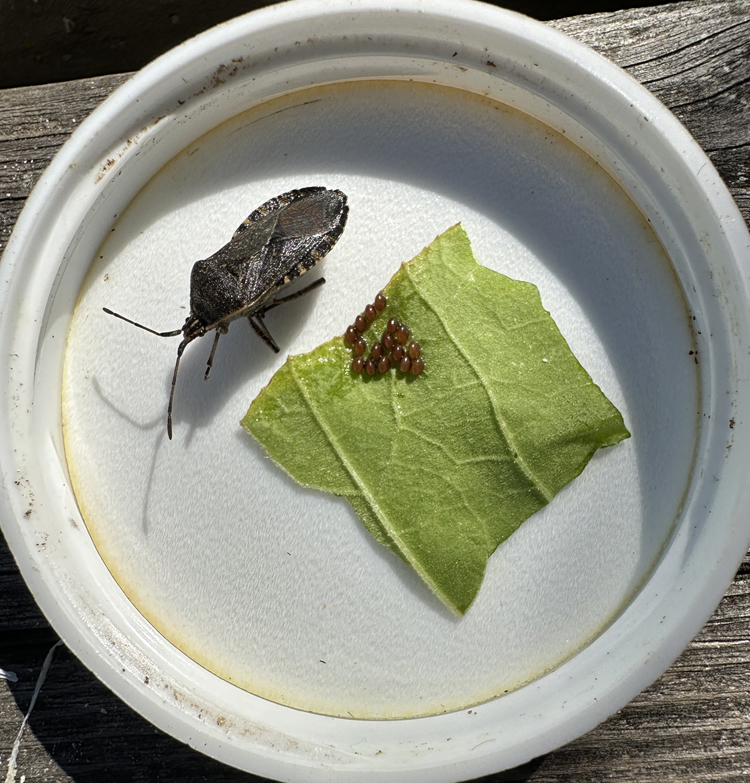
Squash bugs are a common pest on squash plants. They can quickly kill leaves and vines as well as distort and rot the fruit. Detecting and removing them early is the best way to protect your squash harvest.
What to Watch For: https://www.pesticide.org/squash_bugs
Damage: Squash bugs use their piercing-sucking mouthparts to feed on leaf tissue and inject their saliva, damaging the xylem tissue. This blocks the flow of water and nutrients to the plant.
Insect ID: These true bugs (Anasa tristas (DeGeer)) are hard to spot as they hide on the underside of leaves, along stems, under irrigation lines and mulch. The dark brown adults emerge in early summer after overwintering and blend into the soil. Their bright orange eggs, laid in clusters on the underside of the leaves, are the easiest to spot. In 1-2 weeks they hatch into nymphs that feed alongside the adults. For more detail: https://www.pesticide.org/squash_bugs
Early Detection and Rapid Response Management
Monitoring: Monitoring and handpicking adults, nymphs and eggs can help reduce or eliminate squash bug populations in gardens. Check the underside of squash leaves on a weekly basis or daily if you observe adults or eggs. Drop any adult, nymph or section of leaf with eggs into a bucket of soapy water.
Exposing: A vigorous watering at the base of the squash plant stimulates adults and nymphs to quickly climb up the stem. Hand-pick them as they climb and drop them into the bucket.
Trapping: Squash bugs will hide under boards placed on the soil. Pull the board up early in the morning and be ready to grab the bugs and drop them into the bucket.
Case Study in Demonstration Garden
Beginning in late June, in a 1-acre community garden in SE Portland, dozens of squash bugs and hundreds of eggs were detected and removed. Daily monitoring and removal paid off. No leaf or vine damage have yet been detected. The numbers of bugs at all stages has decreased and all squash plants are flowering.
Varieties: Squash bugs have been detected in similar abundance on all varieties of squash: Delicata, butternut, Tromboncino, Little Jack pumpkin, Kabocha and zucchini. No insects or eggs have been detected on cucumber or melon plants.
Watering methods: There is no difference in abundance of bugs between container beds with drip irrigation, in-ground beds with irrigation, or beds that receive hand watering at the base of the plants.
Bare Soil vs. Mulch: There is no observed difference in abundance of bugs between beds with bare soil or those mulched with arborists wood chips.
Trellising: Trellising vines has made the eggs, adults and nymphs easier to spot. Fewer adults are found on the soil as the vines begin to climb, presumably because there are fewer leaves to cover the soil.
Click here for a printable pdf of this article. Written by Carole Hardy July 2024
 Clackamas County Master Gardener™ Association